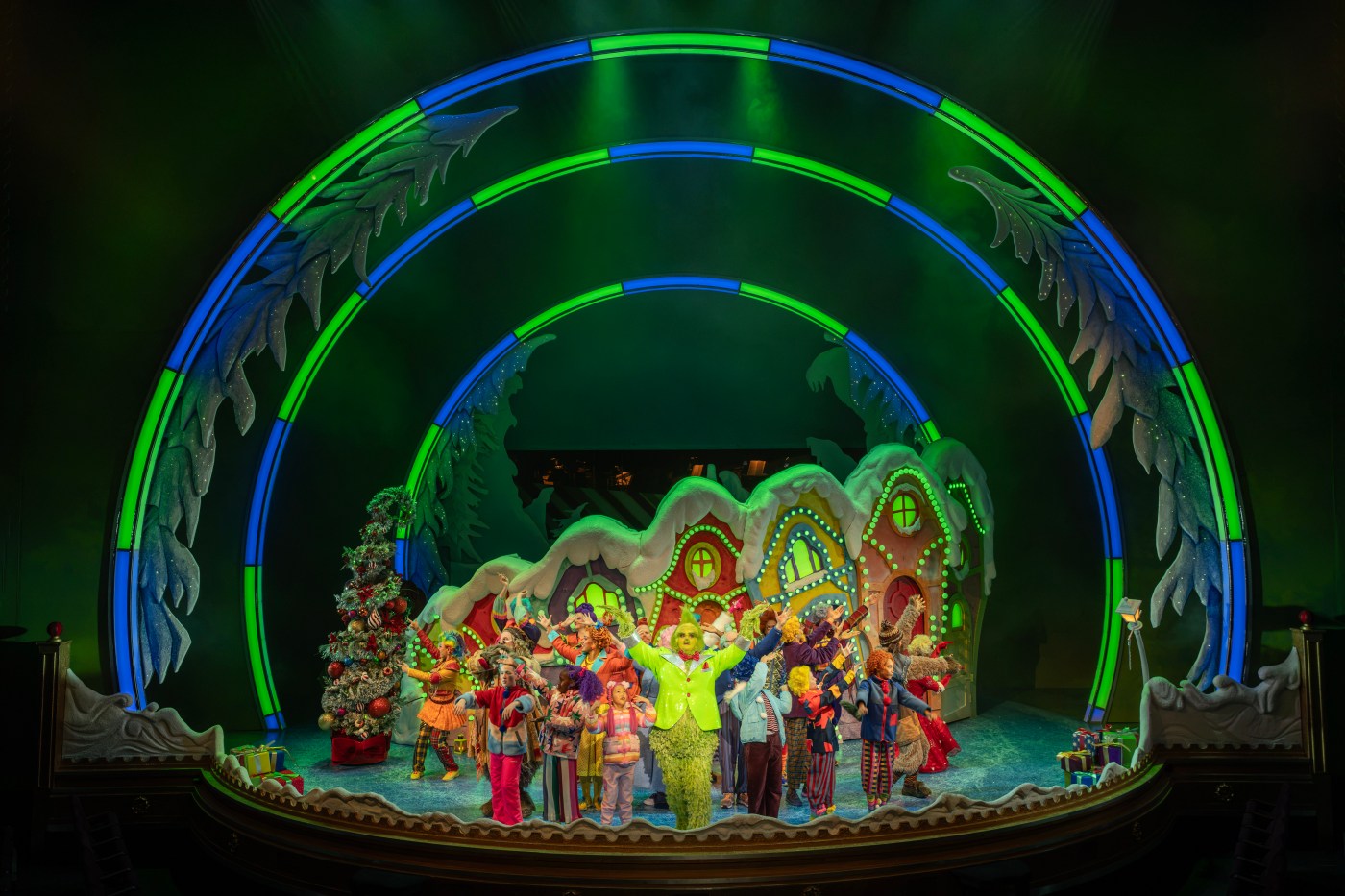
I always approach theatre visits with an open mind but make an exception in the way I look forward to the Leeds Playhouse Christmas Show. They usually throw everything at it and come up with a corker. This year was no exception except that, sadly, although the script was executed superbly well by the cast and technical creatives, the source material was not really conducive to the way in which it was produced. Dr Seuss was not on the children’s ‘must read’ list when I was a sprog, the first time I ever heard his name was in the Roger Miller song, Little Green Apples, in 1968 when I was 18. The age advisory note on the website is 4+ so, although I fall into that category by 73 years, I don’t think it was aimed at me, or at least I hope it wasn’t, as I would have been rolling my eyes even had I just scraped in at the bottom end of the scale.
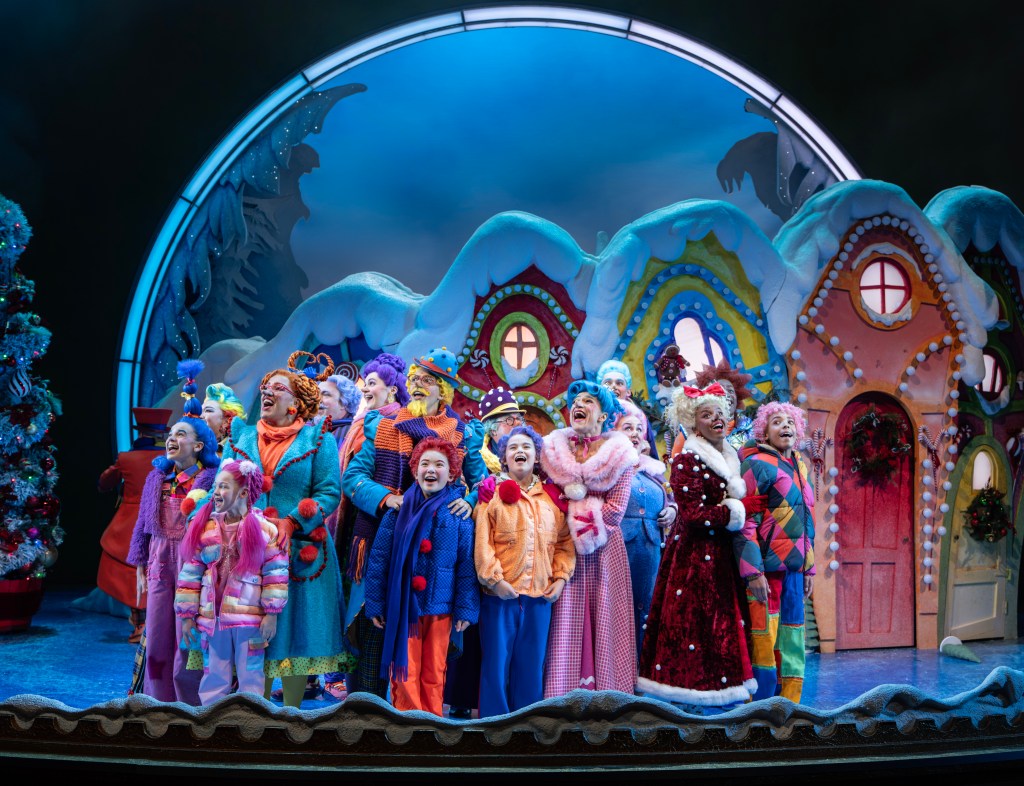
The story is a dumbed down version of A Christmas Carol, and boy, was it dumbed down. It concerns a creature called a Grinch which lives in a cave in Mount Crumpit, overlooking the town of Whoville, inhabited by Whos. They love Christmas, whereas the Grinch hates it and gets annoyed with the frippery and celebration associated with the holiday.
One Christmas Eve he decides to go round the town at night disguised as Santa Claus, climb down the chimneys and steal all of the presents, food and decorations so that festivities won’t take place.
When he awakes on Christmas morning he is surprised to hear the citizens of Whoville singing happy songs and making merry, even without the accoutrements he has purloined. It strikes him that there is more to Christmas than he thought, triggering an epiphany and causing him to return the swag and join in with the fun.
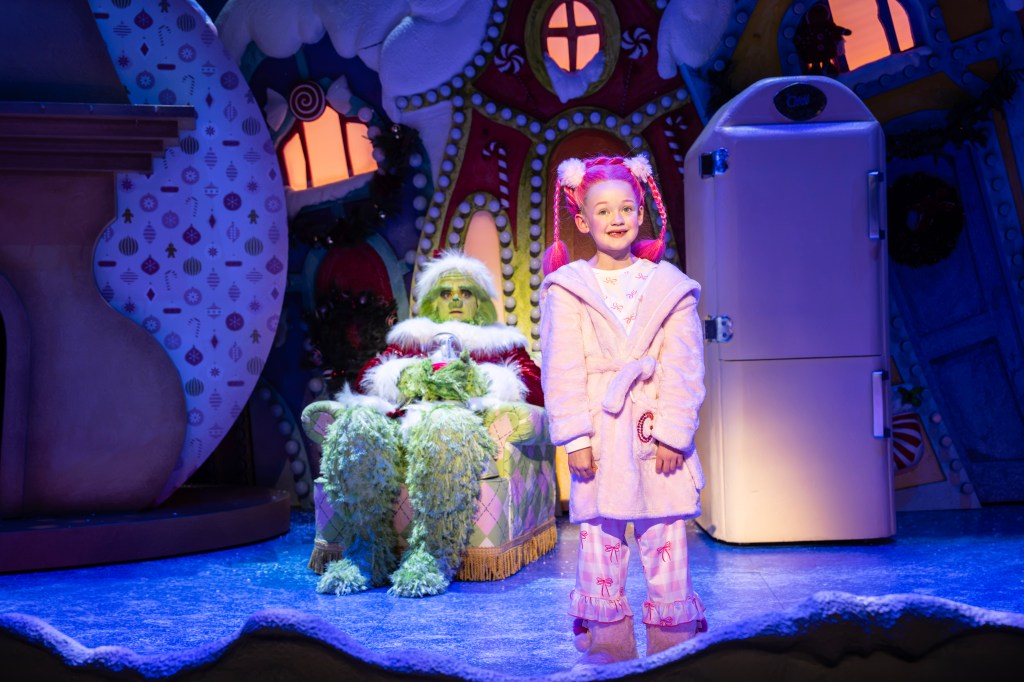
This is all very laudable, but the message that the meaning of Christmas is deeper than the celebration, was hammered home throughout. There is a song quite near the beginning, It’s The Thought That Counts, performed by the residents of Whoville, which begins the onslaught. Speaking of overkill, excluding the Overture and Finale, there are ten different songs, but five of them are performed twice, including the ironically named, One Of A Kind. The vast majority of the show is sung and even the spoken pieces are in rhyme, which wore a bit thin after half an hour or so, making the dialogue more like a Hallmark Christmas card than Wordsworth. Apart from Santa For A Day, sung by Cindy-Lou Who, the cute little girl meant to tug at the Grinch’s heart strings, the songs were all big production jobs, again, overkill. Sometimes less is definitely more.
I was intrigued about the name Whoville as the word ‘who’ seemed to be shoehorned into any available nook and cranny of the script. I thought it might be a reference to Hoovervilles, the shanty towns constructed on waste ground by the displaced unemployed during the depression, but the Whos all appeared to be fairly affluent. Whooverville would also have been far too subtle a pun for this show. They were also pretty weird looking with vivid coloured hair and clothes. Were these people to be taken seriously in their belief, in fact, were they people at all? After googling I found that Whoville’s other mention was in Horton Hears A Who! by the same author, where the city was so small as to be located in a floating speck of dust which was placed into a clover flower. Examples of the desperate attempts to introduce the word were the names of the stores where the Whos did their Christmas shopping. There was Who Look, which I took to be New Look, Whovey Nichols – Harvey Nichols – and Whomleys, where they had a window full of toys. For those of you who (I’m at it now) don’t get drastic with the plastic in London’s Regent Street, although I imagine they sell on line nowadays, which was meant to be Hamleys.
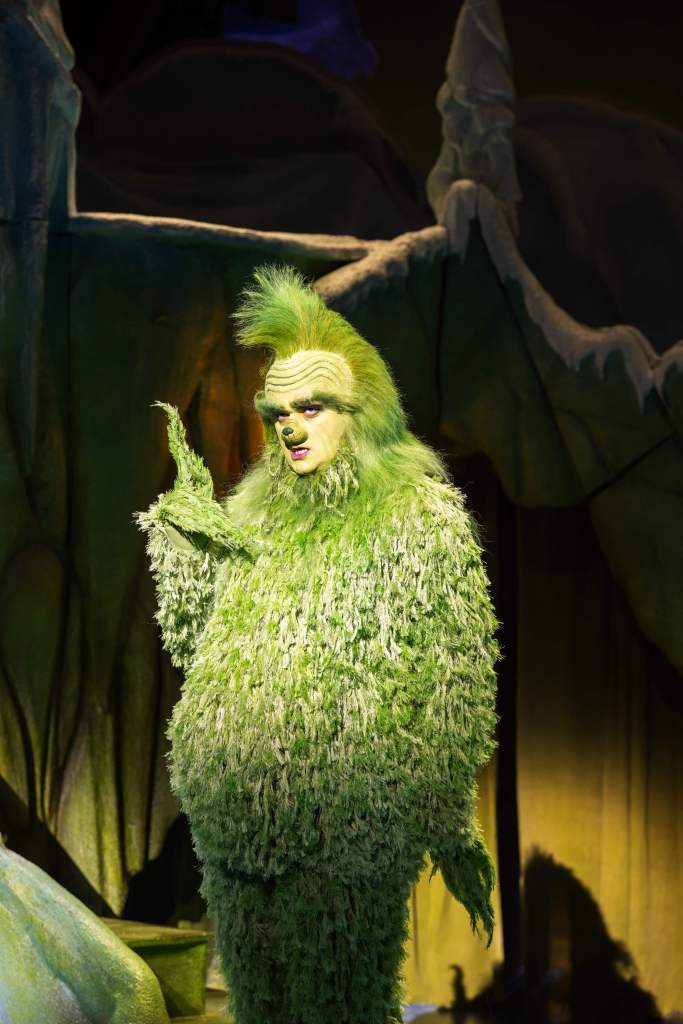
The thing I thought missed the mark by a mile was the Grinch’s outfit. He is supposed to be a sinister, threatening figure, which, being green, would lend itself to a sleek lizard look, but, although his fingers were long and clawlike, the overall impression was of a cuddly green giant.
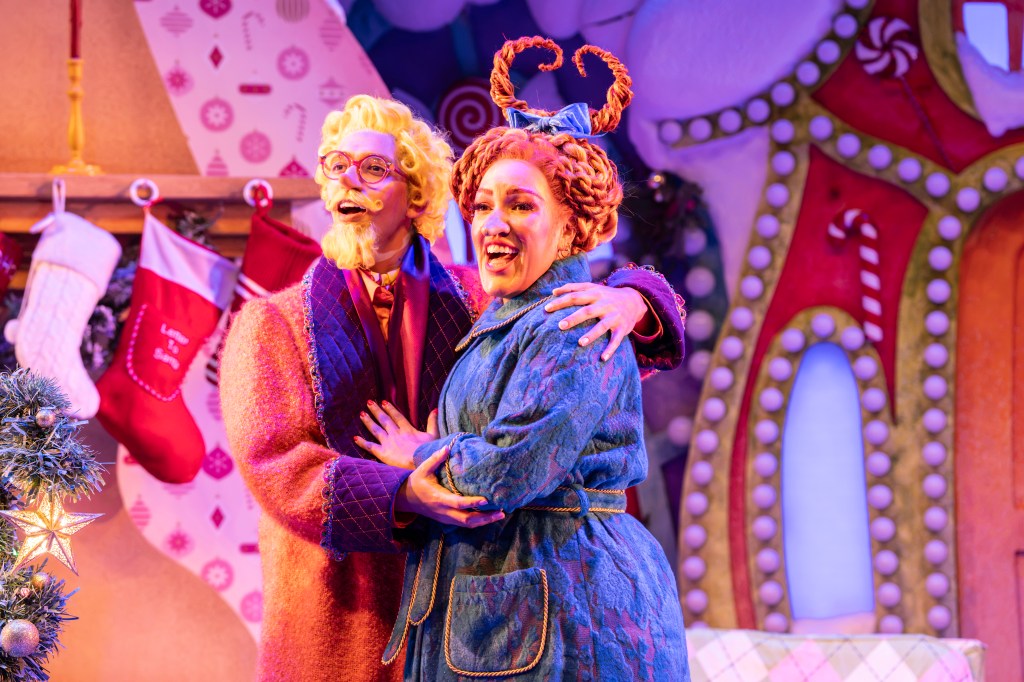
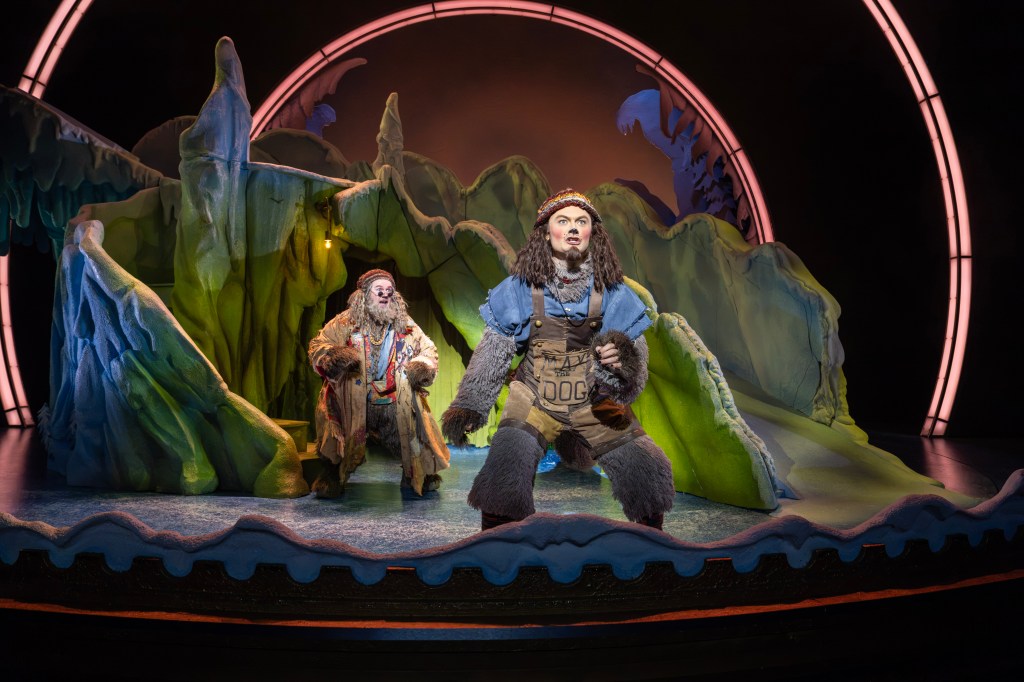
The positives were that the singing, dancing – choreography by Tinovimbanashe Siband – and acting was superb by all concerned, with the Grinch, played by Joel Montague, able to slip in a few well rehearsed ad libs, although some were fairly inaudible. The band, under Musical Director, Livi Van Warmelo, brilliant. The set, designed by Simon Higlet, who also did the costumes – I’ll have whatever he’s on – was magnificent, depicting various locations when the stage revolved to reveal a street, a row of houses, a living room and a mountain. The shops were wheeled on and off. In addition, there was a set of strip lights forming a circular frame around the centre of the stage giving the impression of a snow dome.
The story, which was one huge flashback, was narrated by Old Max, the Grinch’s dog, played by Matt Sutton, who had come back to visit his old home. He was a kind of aging hippy with a guitar in his backpack, pretty unusual for a hound. His younger self in the flashback, although they appeared together in some of the scenes, was Jack Arnold. Being a child, Cindy-Lou Who, is played in rotation, as are the other minors involved, Ellie McArdle filled the role this evening and was excellent.
Once again, I must stress that this show was not aimed at me, and some of the other adults appeared to like it, a couple of them saying that they were there because they liked the film with Jim Carey so, if that is your thing, get along to Leeds Playhouse before the run ends on 16th January, 2027 but don’t hang about, tickets are already in short supply.
Dr Seuss’s How The Grinch Stole Christmas! The Musical is a Leeds Playhouse production in association with Running Subway. Book and Lyrics by Timothy Mason and Music by Mel Marvin. Director Tom Wright. For further information and booking please go to https://www.leedsplayhouse.org.uk/event/dr-seuss-how-the-grinch-stole-christmas-the-musical/
To see what else is on it is https://www.leedsplayhouse.org.uk/whats-on/
Photographs by Johan Persson

