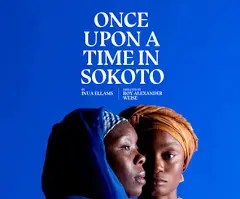
Ever since I saw that this was a play by Inua Ellams, the writer responsible for the brilliant Barber Shop Chronicles, I have been in a state of eager anticipation. Thankfully I was not let down as, although this is a piece in total contrast to the last in content, it is just as wonderfully written and constructed. The best way of tackling a huge subject is to personalise it so that the consequences can be assimilated by the audience rather than being lost in a crowd of both people and data. Like the Barber Shop Chronicles, this deals with the African and English communities via a set of fictional individuals. This time the action is set in the years from 1865 to 1903 in what is now Nigeria, rather than in present day multiple locations.
I have to confess that there is a lot about this play which I didn’t understand, such as the relationships between the various religions, townships and cities involved, but the play was presented in such a way as to make it accessible to those like myself, as well as the audience members who are familiar with the culture. The main tool to achieve this was the use of a narrator, who kept popping up to explain the timeframe of the various scenes and how the action fitted in with the general situation in the rest of the world. I now know that when Millwall Football Club was founded in 1885, they wore indigo shorts from material made in Sokoto. Now there’s one for the pub quiz. The fact that it was a signed and subtitled performance which I saw also helped.
The play opened with the cast of four walking onto the stage and introducing themselves and the characters they portrayed. They also told us about storytelling in the region and how, when someone uttered a phrase, the listeners would reply with a stock response, something which we were coached into doing. Fortunately it only cropped up a few times.
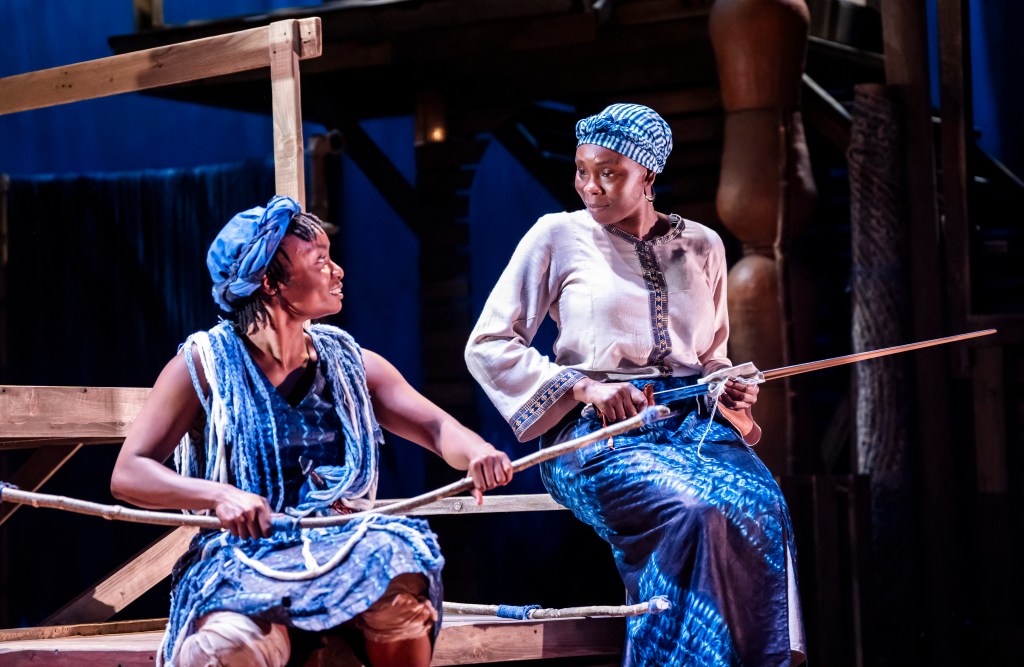
The opening scene was set in 1865, sixty years after the Caliphate of Sokoto was founded. We are in the grounds of a large residence belonging to a wealthy trader in indigo, a highly sought after commodity, who had just become the father to a daughter. Skip to 1883 and the pair are discussing the family business with the girl, Zinari, now a woman, telling her father that she wanted him to dispense with the use of slaves and open a school for girls. Being a Fulani Muslim, he was loathe to do either as his motto was ‘Business is everything’ and he relied on free labour which education might throw into jeopardy. As the pair were in deep conversation, a young girl ran onto the stage, closely pursued by a man with a sword. She was a slave who had been causing trouble by rebelling against the system. As the guard was about to deliver the coup de grâce the father told him to spare her but banish her to Libya to be sold. It transpired that she had a baby girl, but they decided that the other slaves could raise it in her absence. The stress of this incident causes the father to have a seizure and die.
We then move on a few years and the slave’s daughter, Nafisa, has taken after her mother and become a thorn in their side. Hadiru, an employee of the late father, but now working for Zinari, has impressed his boss and she tells him to marry her, not because of love but it makes business sense. They are happy for a while but problems occur when Hadiru wants children while Zinari doesn’t. Being a Muslim, he says that if she refuses to have a family he will take another wife, which he ends up doing. His choice is none other than Nafisa and the three live in a less than harmonious household. The plan works and soon twins are born, a boy and a girl, which causes even more friction between the two wives.
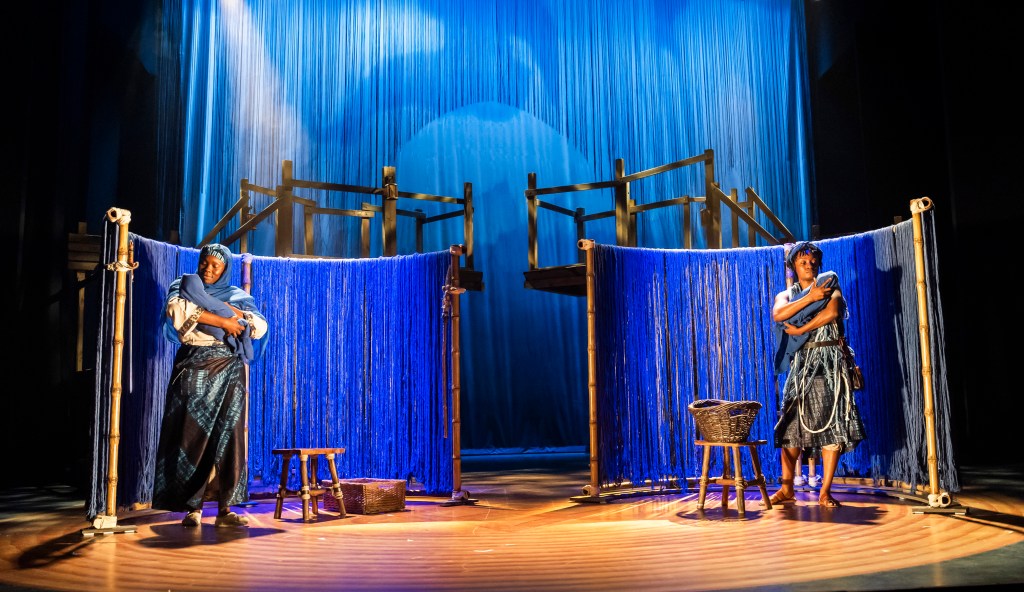
Outside of the domestic bliss, there is trouble with the European countries trying to obtain expensive exotic goods, including indigo, which the Fulani, being nomadic, bring to Sokoto via the Spice Trail and Silk Road. The local currency is the cowrie, not a coin but a type of shell which the English have discovered can be found in great quantities in Australia, so they devastate the market by flooding it with sacks full of them. This causes Zanari, who is still running the business, to get the other African traders to refuse to sell to Europeans, who take the logical next step of invading the continent and taking over the handling of goods and the slave trade. Things come to a head in 1903 when, after defeating Benin and surrounding countries, the English conquered Sokoto, renaming it Northern Nigeria Protectorate.
There was obviously a lot more to the play than that, but I don’t want to make any errors in addition to the ones possibly present in the above paragraphs, so will leave it there.
Despite what you might think, this was not all doom and gloom. The main focus was the contrast in the lives, and lifestyles of the two women, who eventually found reconciliation. There were some tender moments, quite a bit of comedy and, as Nafisa was not leading a conventional life as a slave, but making money on the side by dancing, there was some of that. Not only was she a businesswoman, but Zanari was also a poet and in one scene, she reads out one of her works. Not to be outdone, Nafisa makes up a verse on the spot and augments it by singing, which morphs into a rap.
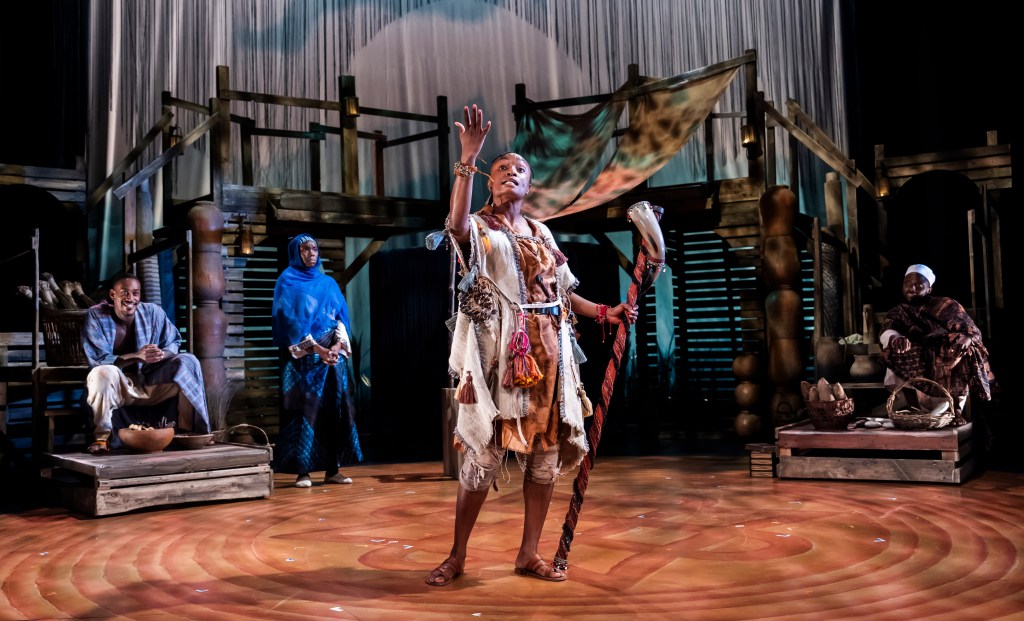
The acting was top notch by all involved and I must make special mention of Sam Lyon-Behan, the Fight Director. There were a couple of the most realistic fight scenes I have ever witnessed, some involving swords. I realise that they were props but the ferocity with which they were wielded was quite unsettling, especially when aimed towards the women.
Although hard work in places, I really enjoyed this play and would recommend it, as it throws light on a part of history which tends to be polarised. Slavery is a bit of a hot topic at the moment and to discover the it was so rife amongst native Africans for centuries, throws a different slant on the subject. I probably missed something but the ban on girls not being allowed to go to school seemed at odds with the seemingly highly educated Zanari. Was it just girl slaves who were banned rather than females as a whole?
The one thing that I thought was not in keeping was the audience participation. Aside from the pantomime-like response to a trigger phrase, we were also encouraged to chant political slogans during a demonstration, I was more interested in being informed and entertained than becoming embroiled in civil disobedience. Even so, I will still be keeping my eyes open for more works by Innua Ellams.
Once Upon A Time In Sokoto, directed by Roy Alexander Weise, runs at Leeds Playhouse until 14th November, for more information and tickets, please go to https://www.leedsplayhouse.org.uk/event/once-uopn-a-time-in-sokoto/
It continues its tour at Brighton Dome Corn Exchange 17th-21st November, Bristol Old Vic 2nd-13th February, 2027, Theatre By The Lake 24th-27th March, 2027 and Lyric Hammersmith 13th April-18th May, 2027. For more details including links to book and a trailer, click on https://fueltheatre.com/projects/once-upon-a-time-in-sokoto/
To see what else is on at Leeds Playhouse it is https://www.leedsplayhouse.org.uk/whats-on/
Photographs by Tristram Kenton

