I knew that the higher education system was in need of further funding, but when I was invited to view some books donated to the University Library I assumed things were more serious than I thought. I was contemplating taking along my old Jeffrey Archer novels or well-thumbed paperback copy of Lady Chatterley’s Lover from the 1960s to support the cause, until I read further down the email.
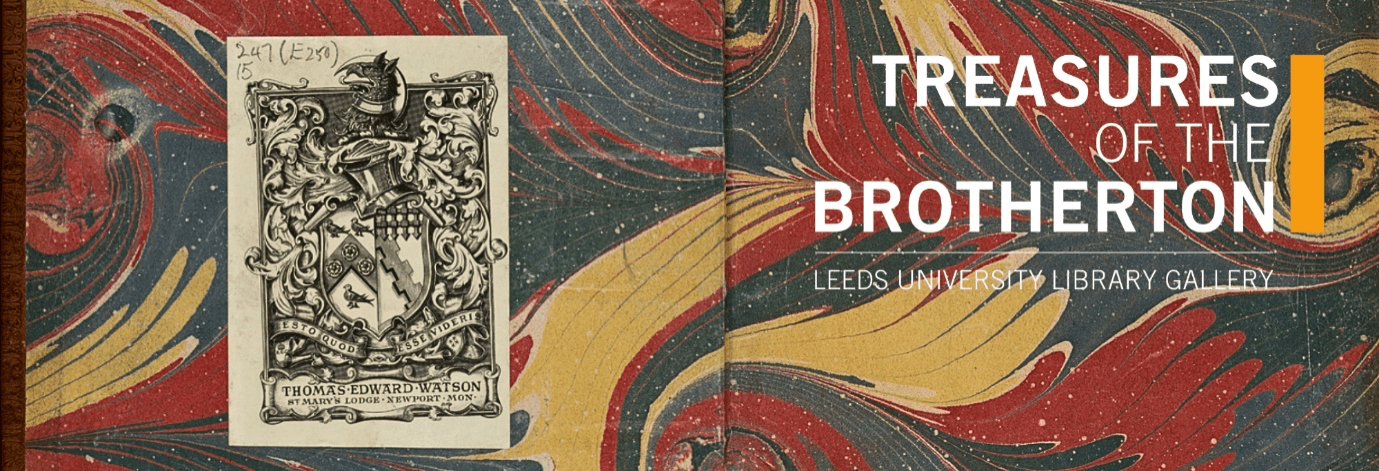
The tomes in question are not of the ‘grab something brainless at the airport to read on the beach’ variety, but rather, rare volumes from the past 1,000 years. They were donated to the University by the descendants of Sir Thomas Edward Watson (1851-1921) who made his fortune from shipping and coal, using the money to amass a collection of early manuscripts and printed books, including a rare one by Caxton.
Edward Allen Brotherton – after whom the building and library are named – made his pile from chemical manufacturing, and has already contributed several items to the library including a Shakespeare First Folio in 1930, the year of his death. That’s Brotherton, not Shakespeare.
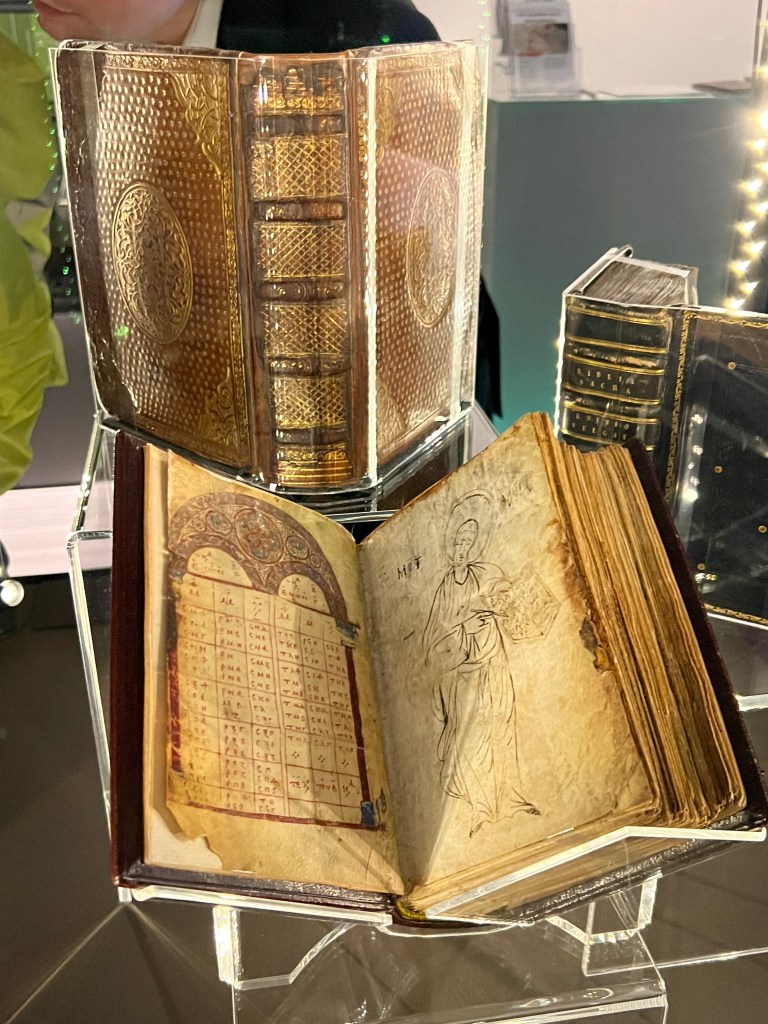
The oldest piece from Watson’s new batch is a Greek gospel book from Byzantium, dating from around 950AD, which is also now the oldest piece in the whole library. Unsurprisingly it is not in pristine condition having had annotations, text worn away and rewritten – I used to run my finger over the page when I was learning to read, some things never change – several lost leaves replaced and a drawing of St Matthew added by a 15th Century reader, obviously doodling out of boredom – been there too.

Try turning this map upside down in the passenger seat of a Fiat 500
The exhibition has been divided into different topics to give it some order, so there are sections on travel, design, politics and activism and astronomy among many others, even space travel and cookery, perhaps I should have brought my Jamie Oliver collection after all.
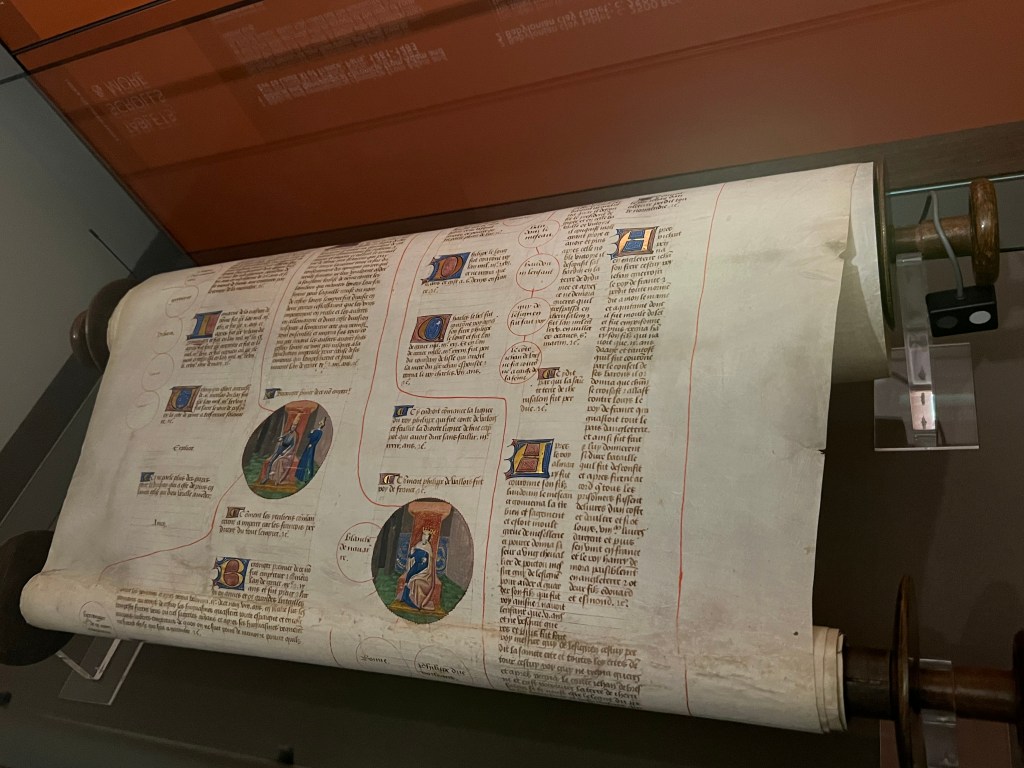
There is also a scroll which looks as though it could have been manufactured yesterday it was in such good condition but not something to read on the train.
Books and Benefactors continues in the Treasures of The Brotherton Gallery until 6th April, 2024. I am not sure whether this is of any significance but find it co-incidental that that just happens to be the first day of the next tax year. The reason my mind flipped in that direction was that the gifts from both of these collectors were donated as part of a scheme called Acceptance in Lieu which is administered by The Arts Council through a panel, chaired by Michael Clarke CBE. The idea is that anyone presented with a large Inheritance Tax bill can offer items of cultural, scientific or historical importance to the nation in lieu of part of it. It is the panel’s job to assess the suitability of such items for the scheme and then determine a fair price for both the donor and the taxpayer. It makes a change for a tax scheme to be of benefit to everyone rather than just off-shore accountants!
Although this particular exhibition ends on Fiscal New Year’s Day, The Treasures of The Brotherton Gallery is a permanent feature and open to all, free of charge. They also run a programme of public events such as talks, hands-on activities and craft workshops.
For details of this exhibition, which is open Tuesday to Saturday 10.00am – 5.00pm, and more, please go to https://library.leeds.ac.uk/info/1905/about/116/treasures_of_the_brotherton_gallery where there is also a short film worth watching.
Feature image from Leeds University Library. Photographs by Stan Graham.
 Tyke It To The Limit
Old Byzantine books – even better than Mahler 4! Keep up the good work!
LikeLike