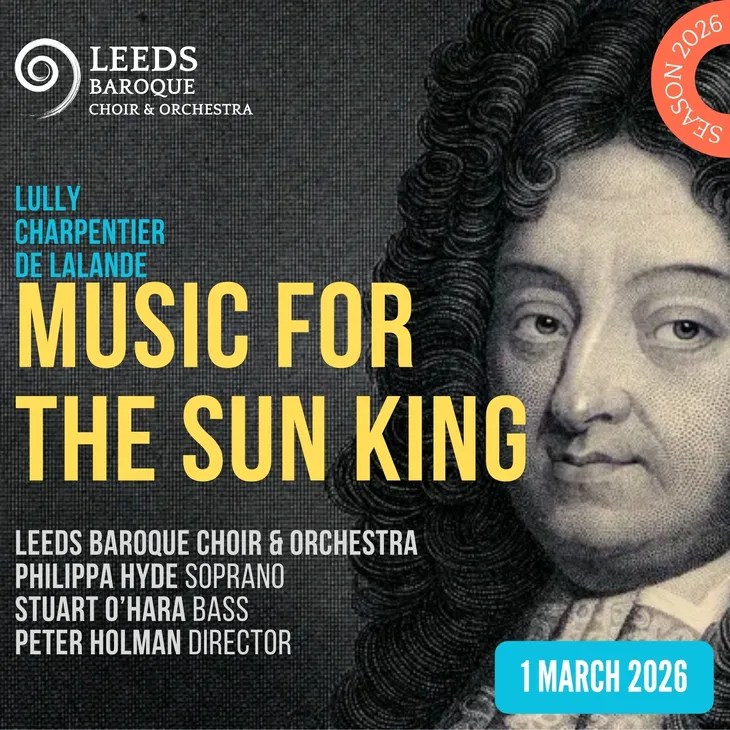
And so my second season of Baroque music begins – with a trip back to school. Not the one I went to, which has long since closed down, but a magnificent complex on the outskirts of the City in Alwoodley, complete with its own theatre, named after local legend, Barry Cryer. The theme of the day was the music composed and performed for King Louis, not the hep monkey in The Jungle Book, so no ‘I Wanna Be Like You’, but King Louis XIV of France, who ascended to the throne in 1643 at the age of five, reigned for a record 72 years and who seems to have turned out to be a human version of King of the Swingers. Oo be doo.
The programme was divided into two sessions, with works by Jean-Baptiste Lully, Michel-Richard de Lalande and Marc Antoine Charpentier. As usual, it was an eclectic mix covering combinations of various sections of the orchestra, choir and soloists. You never get bored with Baroque – I might register the copyright on that in case someone wants to use it as a strap line.
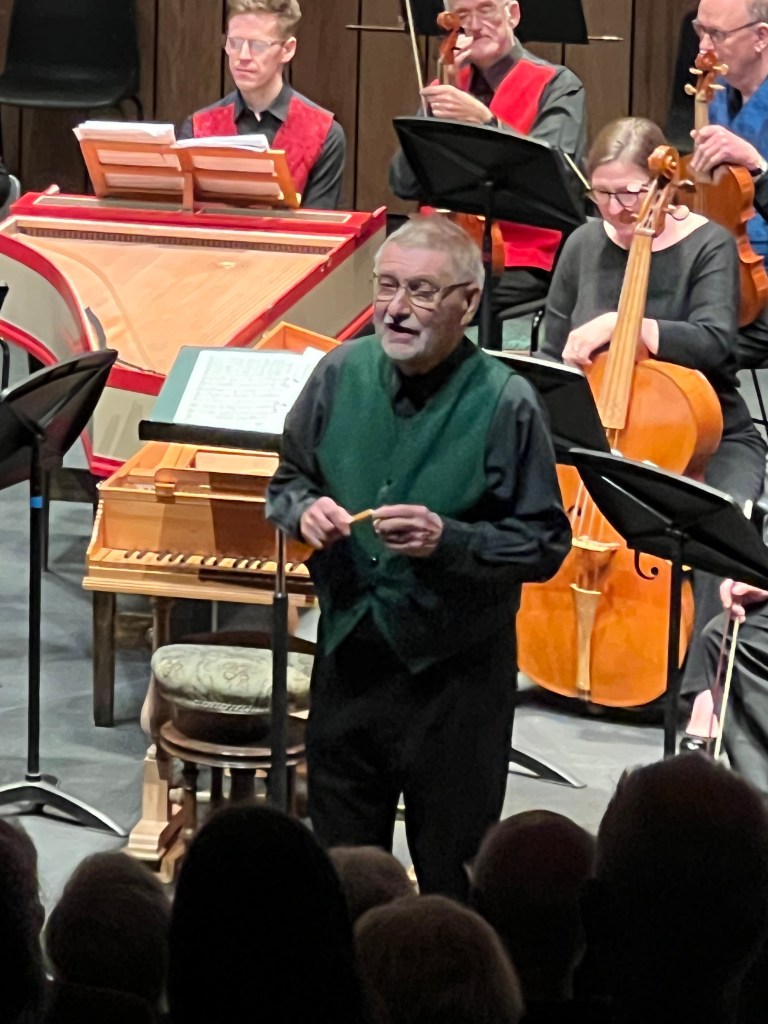
As is the norm, each piece was introduced by Director, Peter Holman, to put them in perspective and enlighten we casual listeners as to what we should be listening for. This enhanced my enjoyment no end.
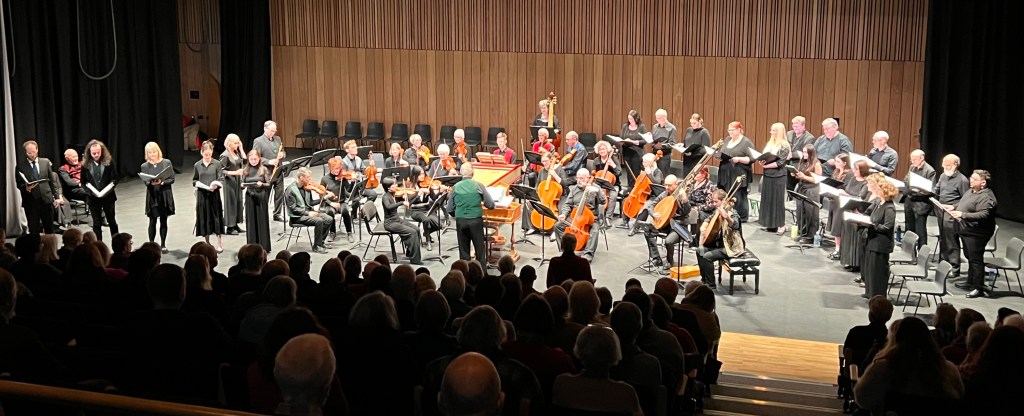
The first item on the agenda was Domine salvum fac regem, one of Louis’ favourites from childhood, which he had played every time he attended mass at the Royal Chapel. It was the first of three compositions by Jean-Baptiste Lully and featured five soloists: Philip Hyde and Nina Parkes, sopranos, Emma Page, alto, John Scholey, tenor and Stuart O’Hara, bass. It also included the whole orchestra.
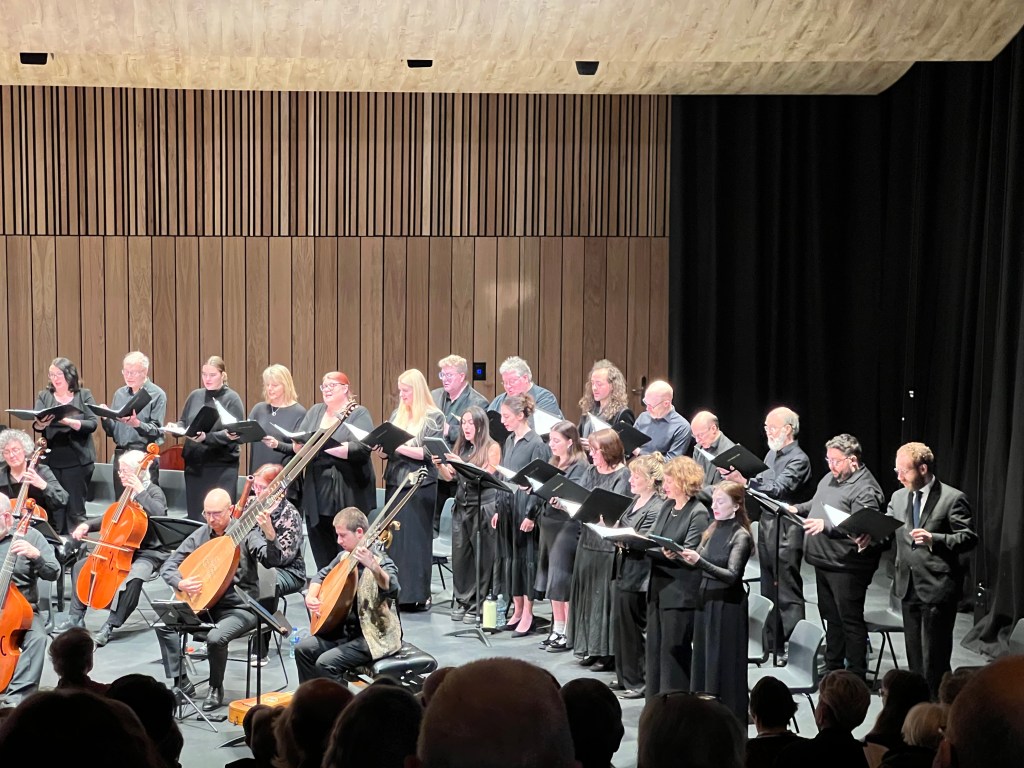
The Choir, but you guessed that.
Lully was also responsible for the second piece which was brilliant. It was called La grotte de Versailles and was set in, you guessed it, the grottos of the palace of Versailles, although first performed in the grotte de Téthys as the ones at the royal gaff had not been completed yet.
Its theme was a rustic celebration of the pleasures of love, by singing and dancing shepherds, sadly not featured in this performance. When we get to the solos, Iris, who is whinging on about being neglected, hears her voice returned by Echo. This was very confusing to a simple soul like me, as I couldn’t see anyone singing the response. All was revealed at the end when soprano, Talia Nabarro, emerged from behind a curtain to be introduced as the invisible singer.
The last work before the interval was de Lalande’s Le Concert d’Esculape. This was a smaller work utilising only a section of the orchestra and four singers, just as well really as it was originally performed in the apartments of Versailles, occupied by Madame de Montespan, described in the programme as Louis’ long-standing mistress. I wouldn’t have thought that the role of a King’s mistress would have involved much standing at all, but you never know with these French rascals.
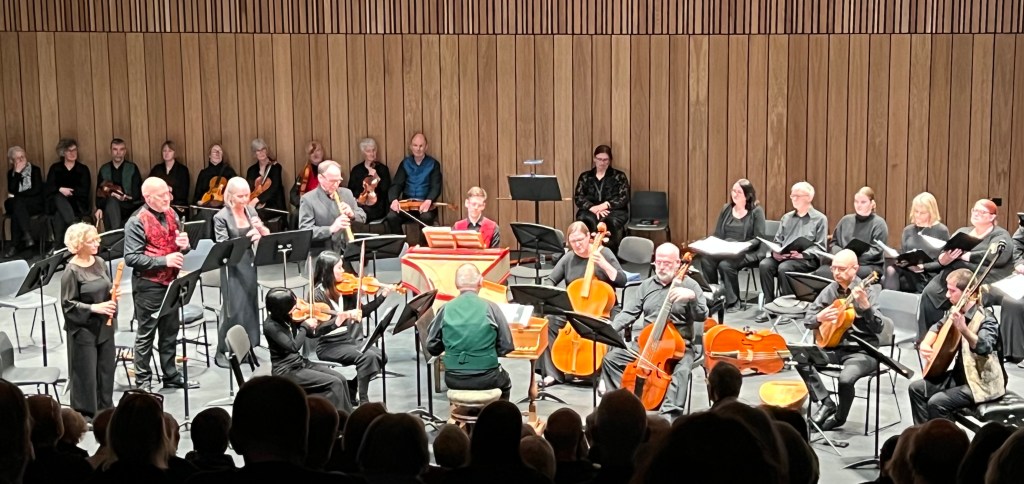
The Chamber Section.
After the break we were back to Lully and imaginary shepherds, with music from a farce called George Dandin, Le mari confondu. Again the lamb tenders were absent, which this time was probably just as well, as the story involved a fair amount of debauchery, when, after a debate about which is better, wine or love, ended in a draw, extra time was played involving both. Not the thing for school on a Sunday, although round the corner on Millionaires’ Row who knows.
The penultimate piece was a little more sedate, although with a hint of jauntiness. It was an excerpt from Lalande’s ballet, Les fontaines de Versailles and was my favourite piece of the programme.
Following the showbiz maxim ‘always leave ’em laughing.’ the final piece was written by Charpentier for the funeral of Louis XIV’s wife, Marie-Therese of Spain. Once again the whole ensemble was involved in this grand and moving work, and, joking aside, it was a brilliant way to end the concert and left me looking forward to the next one I can get to.
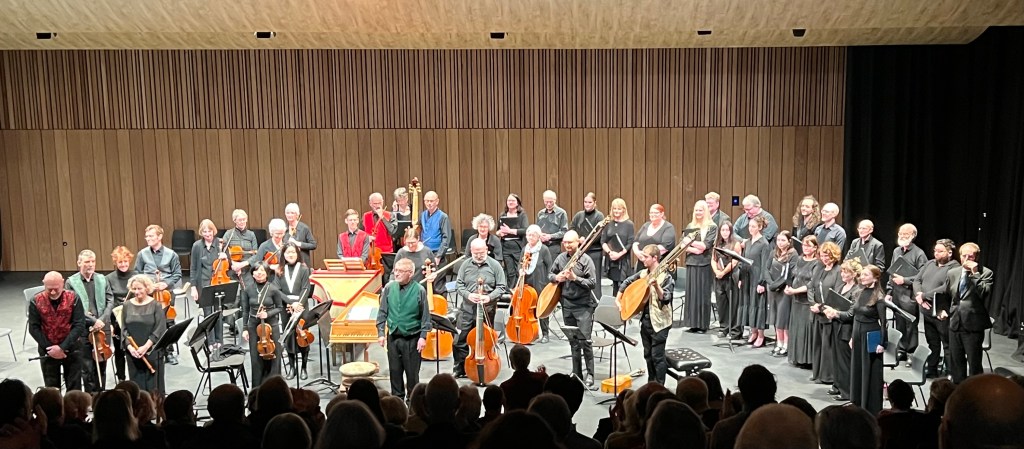
The ensemble takes a well deserved bow
I find it amazing that we can see such incredible talent, a mixture of professionals, amateurs and students, perform a variety of styles to such a high standard on period instruments at a very reasonable ticket price (free for students!).
This year also sees a special event at Temple Newsham House to mark the 400th Anniversary of Leeds being granted City status. What a great venue for such grand music.
I can’t help thinking how times change. In the late 17th century, when King Louis wanted some entertainment on a Saturday night at the palace, he would summon a couple of dozen musicians and singers to the great hall. King Charles III will just say, ‘Hey Siri, Play my weekend mega mix’.
For details of future dates and to find out more about Leeds Baroque Choir and Orchestra, please go to https://leedsbaroque.co.uk/ where, by looking at the Gallery page you can watch videos of some of their performances. To learn more about Barque music, please go to one of their concerts!
Feature image from Leeds Baroque Choir and Orchestra, photographs by Stan Graham
 Tyke It To The Limit