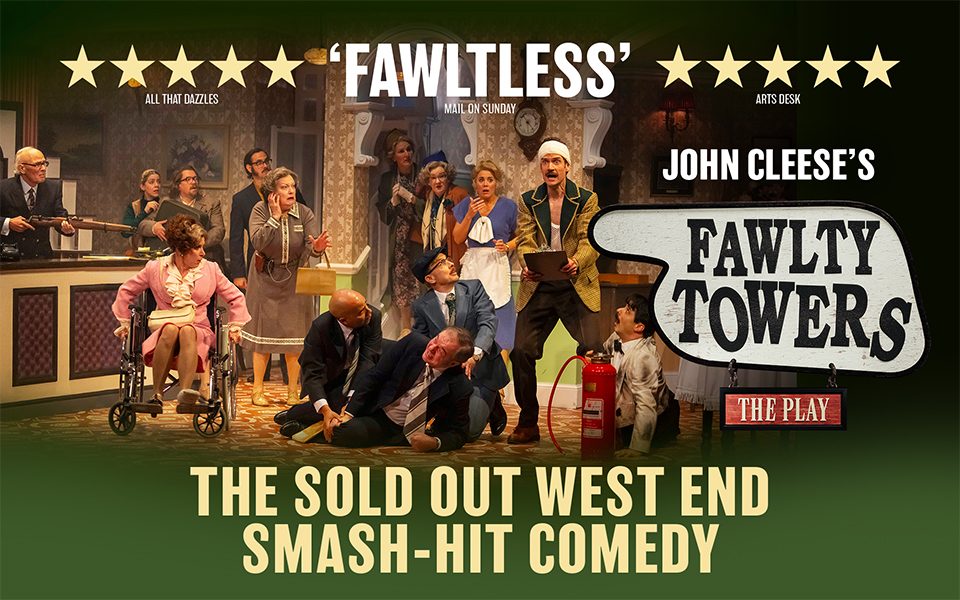
In 1975, Fawlty Towers was required television for those of us in our mid-twenties, as it provided what would now be called water cooler conversations at the office, the day after broadcast. There were only three channels so the odds were that the vast majority of colleagues would have seen it. Although not a great fan of John Cleese as a person, I do admire his skill as a writer and the fact that he called it a day after only twelve episodes, so as to leave viewers wanting more, rather than milk the concept dry.
The said concept was that of a middle aged man, Basil Fawlty, for whom life never went to plan, usually because he was not very good at the process of living. His prejudices and attitudes meant that he was at odds with everyone he came across, especially the guests in the eponymous hotel. He was also hen pecked by his wife, Sybil, who was the real brains behind the venture, thus emasculating him somewhat, as did the efficiency of the waitress, Polly. The only person against whom he could vent his spleen was Manuel, the Spanish waiter, whose English was only passable, but whose enthusiasm knew no bounds.

Domestic bliss between Basil Fawlty, Danny Bayne and Sybil, Mia Austen
Unlike recent television comedies adapted for the stage, such as Drop The Dead Donkey and Only Fools and Horses, which saw the original characters in new storylines, this play consisted of three actual episodes which had been tweaked to form a composite. I thought it worked very well, as one of them concerned Basil Fawlty’s paranoia when he heard a rumour that there was a trio of hotel inspectors in the area and, rather than confine the scenario to a half-hour tranche, the joke played out all the way through the show.
I thought that the success enjoyed by the original was due to it combining several comedy genres, so there was something for everyone. There was farce, not my favourite, slapstick, likewise, but, when melded with scalpel-sharp one-liners and superb put-downs, even they seemed to take on a new aspect. There was also the empathy toward the characters, with a bit of Basil in all of us; totally exacerbated by the incompetence and pretentiousness of others, even though they were traits which he possessed by the bucketload, as I am sure do we, albeit to a much lesser extent. How many of us have felt the urge to thrash our car with the branch of a tree when it refused to start in when we needed it most? That episode was not one of those featured, for obvious reasons.
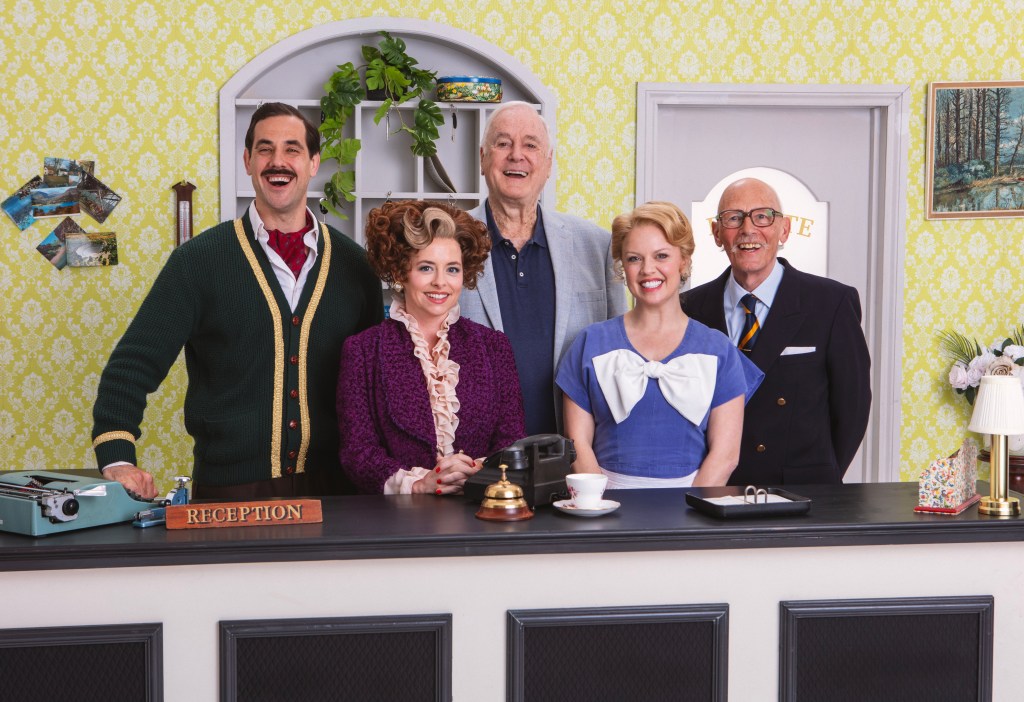
Danny Bayne, Basil; Mia Austen, Sybil; John Cleese, John Cleese; Polly, Joanne Clifton and John Nicholas, the Major, played this evening by Neil Stewart. Photograph by Trevor Leighton.
In the theatre programme, the director, Caroline Jay Ranger, said that she wanted to cast actors rather than impersonators. The acting was superb, with the farcical incidents timed to perfection, as was the dialogue, but the cast were obviously impersonating the original television characters, rather than interpreting them, it would have been disastrous to do otherwise with the vast majority of the audience there to see their iconic heroes. So au fait were they with the tv programme, that they were laughing at the jokes as soon as they began, let alone before they were finished. I normally find it tedious to see a comedy over again as, when the punch line has been revealed, the joke is dead; fortunately I have not watched any reruns so, after fifty years, although familiar with the Germans and the Rat, there were some forgotten parts which raised a chuckle.
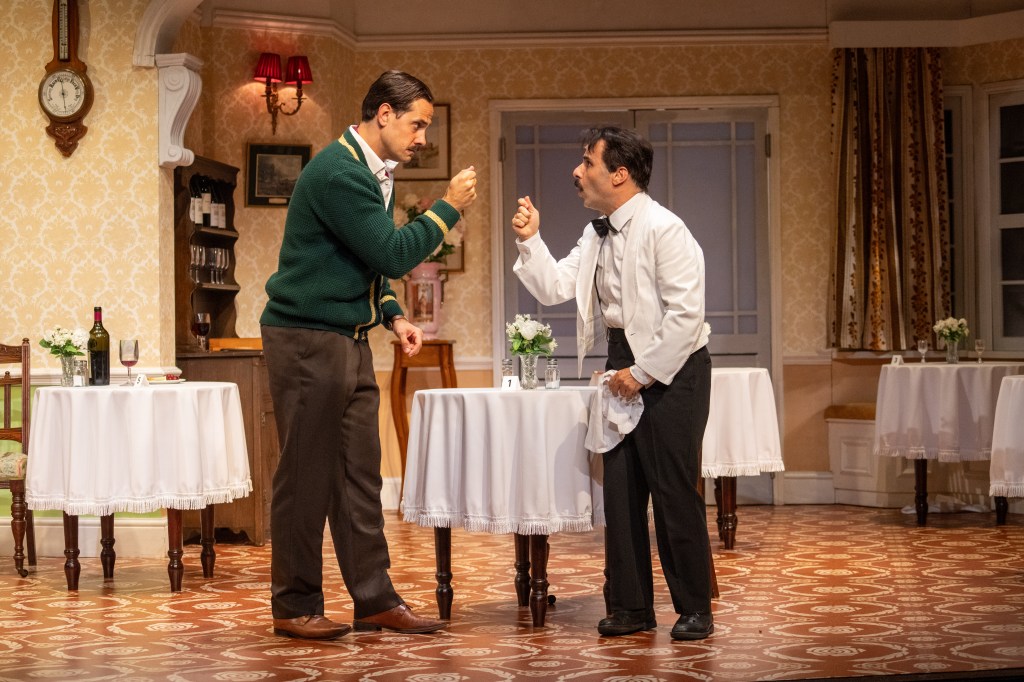
A staff training session by Danny Bayne as Basil, for Hemi Yeroham as Manuel. He’s from Barcelona!
The language is obviously of a previous era, as are the national stereotype references, but, although they would not sit comfortably in today’s productions, none of them was derogatory, in fact, the way in which they were rebutted by the recipients turned the comedy more against the perpetrator than the victim. Sadly, irony is something which seems to be completely lost on this generation who appear only to be able to take each word separately and literally, thus killing nuanced satire, as well as the farcical and slapstick varieties.
The cast had the voices and mannerisms off pat which made me feel especially in awe of Mia Austen, who played Sybil perfectly. It must have been particularly traumatic for her around the time of Prunella Scales’s death at the end of October. Danny Bayne was also a clone of John Cleese with every move perfect, especially the exaggerated goose step in the German section. Although gangly like Mr Cleese, he was a bit more ripped, which was evident when he removed his shirt in one scene and strutted around the stage in only his trousers and vest, at which point I couldn’t help but see a taller version of Freddy Mercury in full flow at Wembley Stadium.
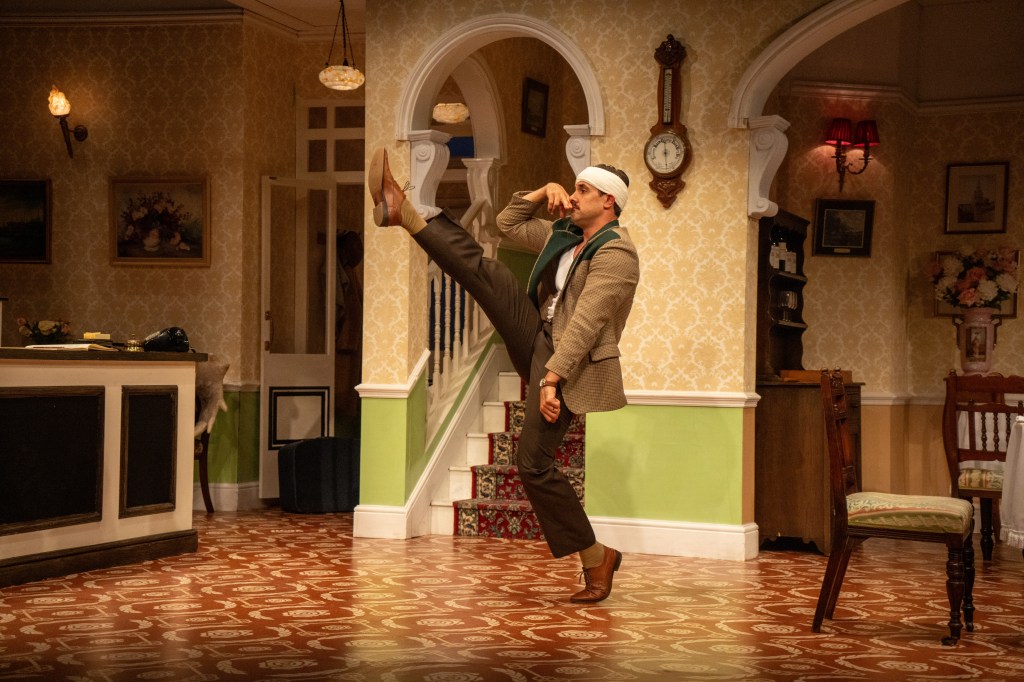
Danny Bayne as Basil Fawlty making the German guests feel at home.
The set was imaginatively designed with recreations of the reception, dining room and a bedroom absolutely spot on, all visible at the same time. There was even an exterior model of the hotel, complete with sign, which, as on the original, changed at the interval.
If you are familiar with the television series I am sure that you will enjoy the play, if only for nostalgia’s sake as everything was totally reminiscent of fifty years ago. I am not sure how younger theatregoers will feel about it, there being none to ask! It matters not, however, as the show is all but sold out, so, if you would like to relive the mid-seventies, although I don’t advise it as things were even worse then than they are now, you had better get a wiggle on and book.
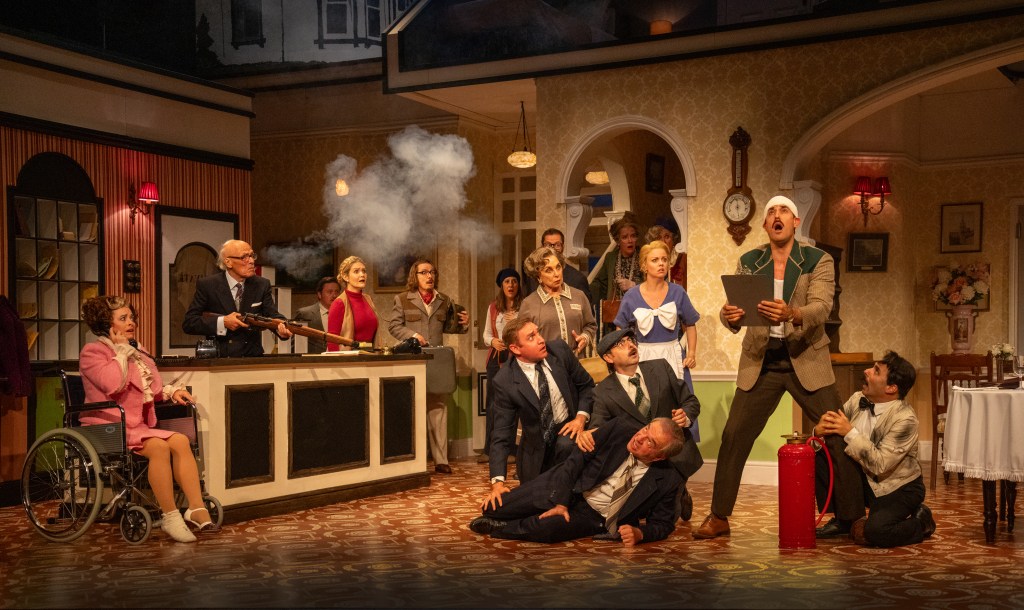
The cast with Basil trying to combine a fire drill, the extinguishing of a real fire and a rat hunt, with limited success.
If you do manage to get a ticket, might I suggest that you take a minute at the end to listen to the music whilst you exit the auditorium. The original Dennis Wilson string quartet signature tune, which was played at the beginning, had been replaced by a similar foursome performing the disco classic I Will Survive, with hardly any noticeable difference!
Fawlty Towers: The Play, is at Leeds Grand Theatre until Saturday, 10th January, 2026. For further details and to book, please go to https://leedsheritagetheatres.com/whats-on/fawlty-towers-2026/ but, as stated earlier, all performances are limited availability.
To see what else is coming to Leeds Heritage Theatres it is https://leedsheritagetheatres.com/whats-on/
Photographs by Hugo Glendinning, except where otherwise stated.
 Tyke It To The Limit