My life seems to have been a series of happy, and sometimes, unhappy accidents, but I have always been able to put a spin on the latter to obtain a positive outcome. What happened on Wednesday evening was most certainly in the former category.
I was sitting in the cafe at Leeds Playhouse grabbing a bite to eat before going in to watch The House With Chicken Legs, when I got talking to a chap at the next table. He said that his name was Garry and he was in Leeds to present a staged reading of his play Last Shift at Seven Arts on Friday night. We chatted for a bit and I found out that Mr Morris now lives in Edinburgh, but, as his play was set in Yorkshire, he decided to put it on here. He said that, as the amount of money needed for a full production had not yet been secured, he had taken the decision to present it as a staged reading. This means that there is no set and only a short rehearsal period so the actors perform whilst reading from the script.
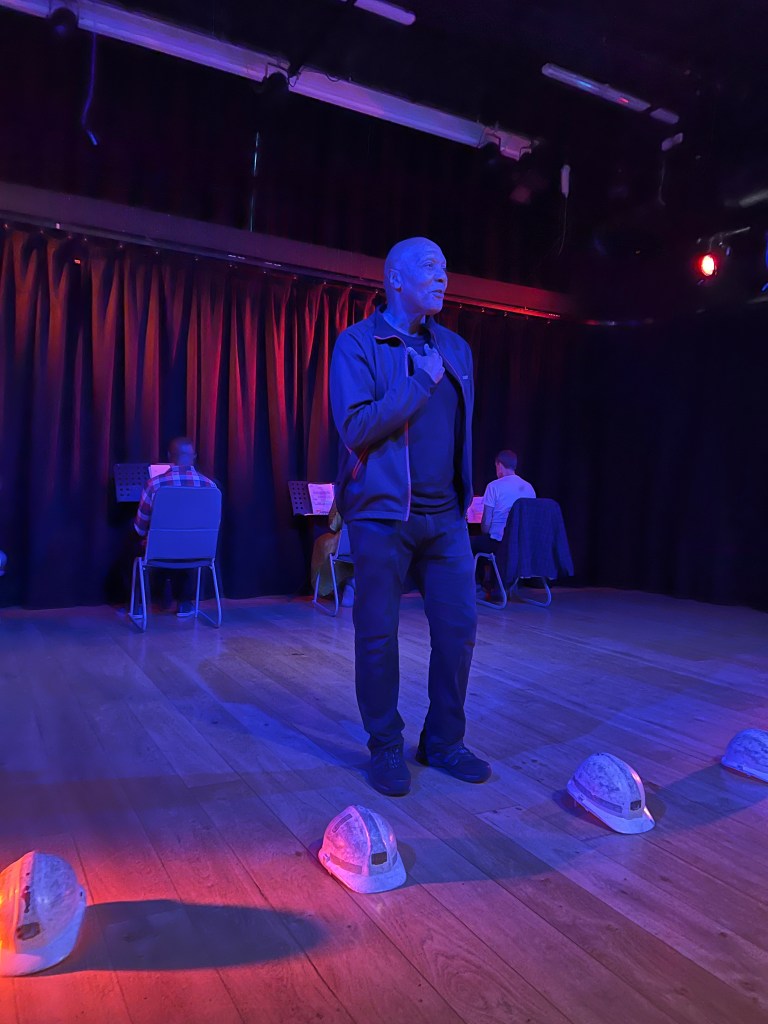
Garry A Morris
My interest was really aroused when he said that the play was about the Lofthouse Colliery Disaster in 1973, as I lived in Wakefield at the time and remember driving home in the dark one evening and seeing banks of floodlights erected near the M1. He told me that one of the men who perished was of Afro-Caribbean descent and he had chosen to write his story. I decided that I really needed to get a ticket and I am so glad that I did.
As background, the tragedy was completely avoidable but the surveyors had not done thorough research so didn’t pick up that there was an underground reservoir near the coal seam to be excavated. The inevitable happened and seven men were trapped in a water filled chamber for six days, at which point one of the relatives said that, even though only one body had been recovered, the rescue attempt should be terminated as it was risking the lives of those involved in the process. The site was duly sealed off and later a seven-sided obelisk erected with one name on each facet. The consequences of the disaster would change the law pertaining to new drilling.

Chris Jack as Duncan
The play was an absolute revelation in the way it told the back story of Duncan, who lived in Chapeltown with his wife June and daughter, Janette. The family were going through hard times, as were many in the early 1970s, and, as an act of desperation, he got a job as a coal miner and moved the family to Wakefield.
The construction of the piece is very well thought out with what amounts to a series of flashbacks to tell the story. Garry A Morris’s notes on the programme referred to ‘exploring history hidden in the precious fragments of memory’. The time shifts are triggered by Janette, now a grown woman, who has arranged to meet Peter, one of her late father’s colleagues at Lofthouse, so as to get a rounded version of his life, and death. This also gives the opportunity to explore his fragments of memory and combine them with hers
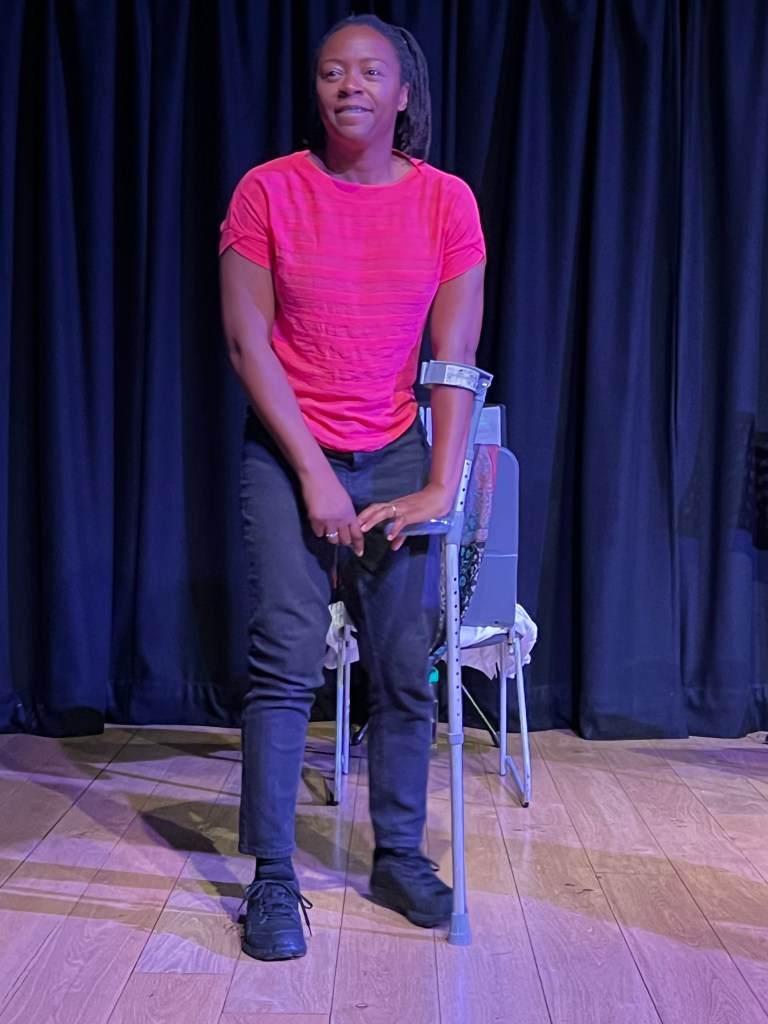
Laurietta Essien as Janette
As well as being an account of the accident, it also focuses on the difficulty in the transition from one close knit community in Leeds, where Duncan was an active member of the Caribbean Society and the Carnival, to another, comprising of miners carrying on a generations-long tradition.
At first the living was good with Duncan being able to buy June an organ, and himself a guitar, as well as giving pocket money to Janette to do with as she will. He is comforted by the way in which she keeps some back to save rather than following the profligate lifestyle her father is leading with his new-found wealth.
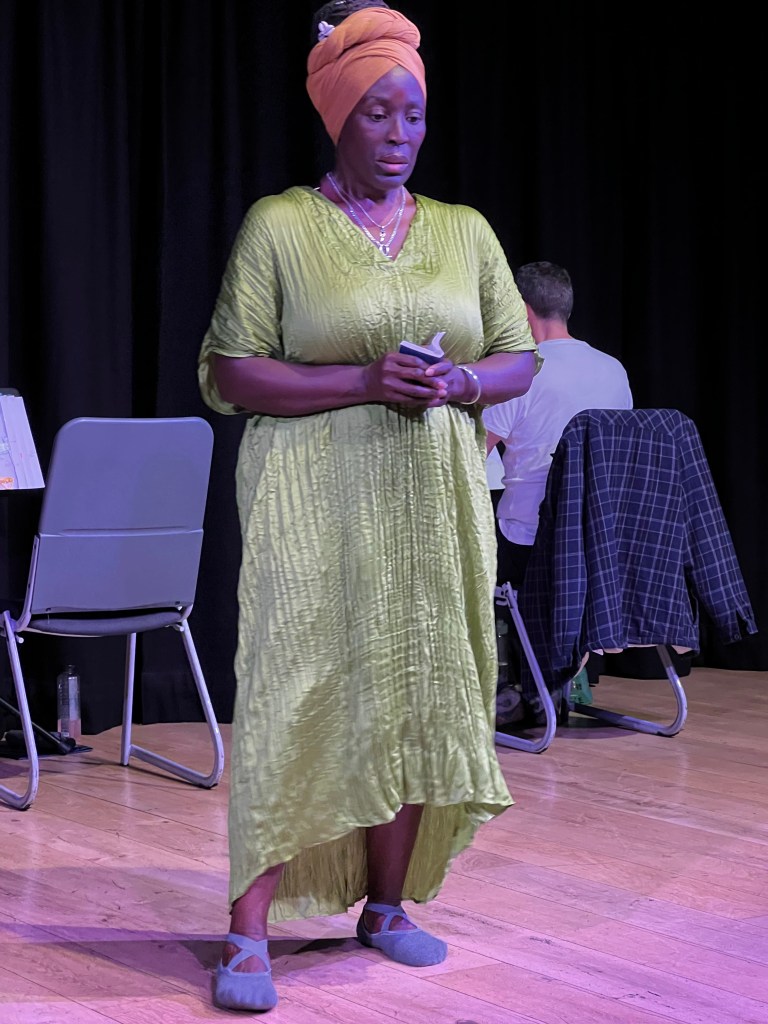
Pauline Tomlin as June
All good things come to an end and an overtime ban followed by the Miners’ Strike of 1972, saw the family back in dire straits. When they returned to work Duncan was doing all the overtime he could to get straight.
The piece, often delivered in broad patois, the acting sublime by all concerned. Even though the performers were reading from scripts and had no scenery and only chairs for props, they were able to transport us to both happy and devastatingly sad places. Towards the end Laurietta Essien, who played Janette, had tears streaming down her cheeks, as did most of the audience, myself included.
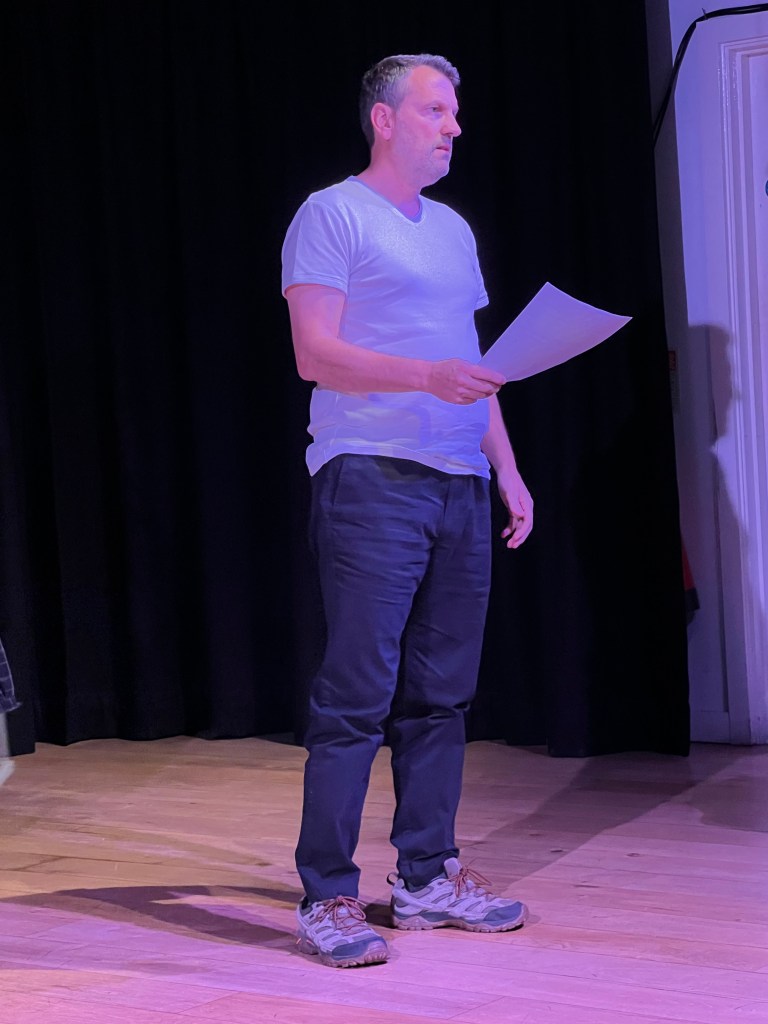
David Chafer as Peter
David Chafer played, Peter who had an impeccable South Yorkshire accent and portrayed the archetypal collier to a tee. He seemed to be able easily to blend compassion with raw honesty. A trait of my friends in Barnsley.
Pauline Tomlin was the long-suffering wife whose husband was either working or at one of his society meetings, but she still kept the home intact and running as smoothly as was possible during the various crises, even though wanting to move back to Leeds.
Duncan was played by Chris Jack with a cheeky charm which meant that you couldn’t dislike him, even when he was being reckless with the family money.
The sound was in the hands of Jake Williams who did an excellent job of balancing the speech no matter whereabouts on stage the actors were. They did not have individual microphones but were reliant on several which were suspended from overhead – where else would they be suspended from!
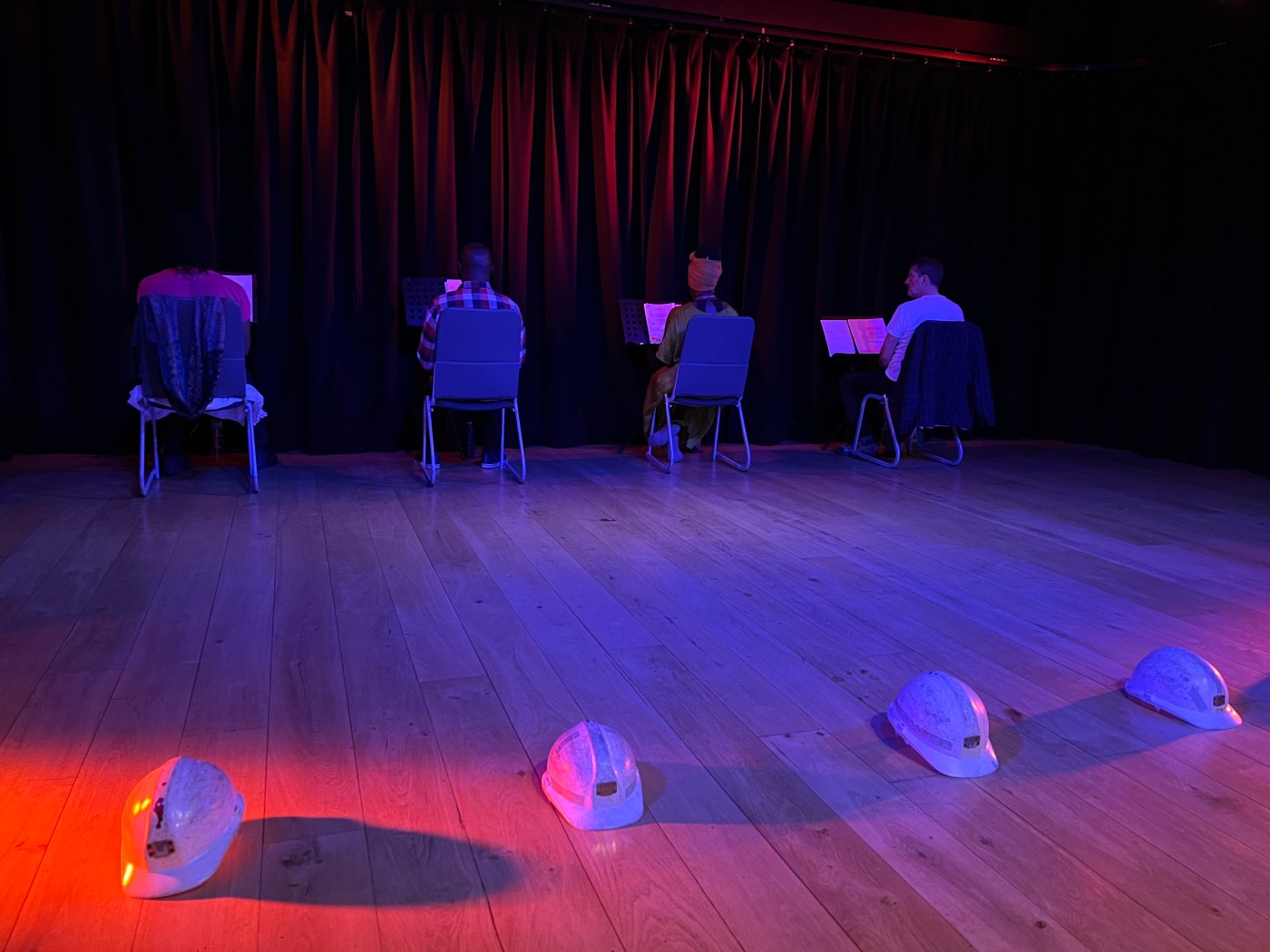
The Director, Olusola Oyeleye, did a sterling job with a bare stage, except for four chairs and seven miners’ helmets placed ominously at the front of the set.
As already mentioned, the writer was Garry A Morris is now based in Edinburgh where he has been the recipient of coveted writing awards.
At the end of the play there was a Q & A session when, after a few questions had been asked, and answered, regarding the play, Ms Oyeleye brought a lady onto the set who she introduced as being the real Janette! If tears had been shed earlier, we were subjected to a veritable tsunami now. I can only imagine, well I can’t actually, how Laurietta Essien must have felt taking the part of, not only a real person who had been subjected to such an horrific experience, but doing so in her presence.
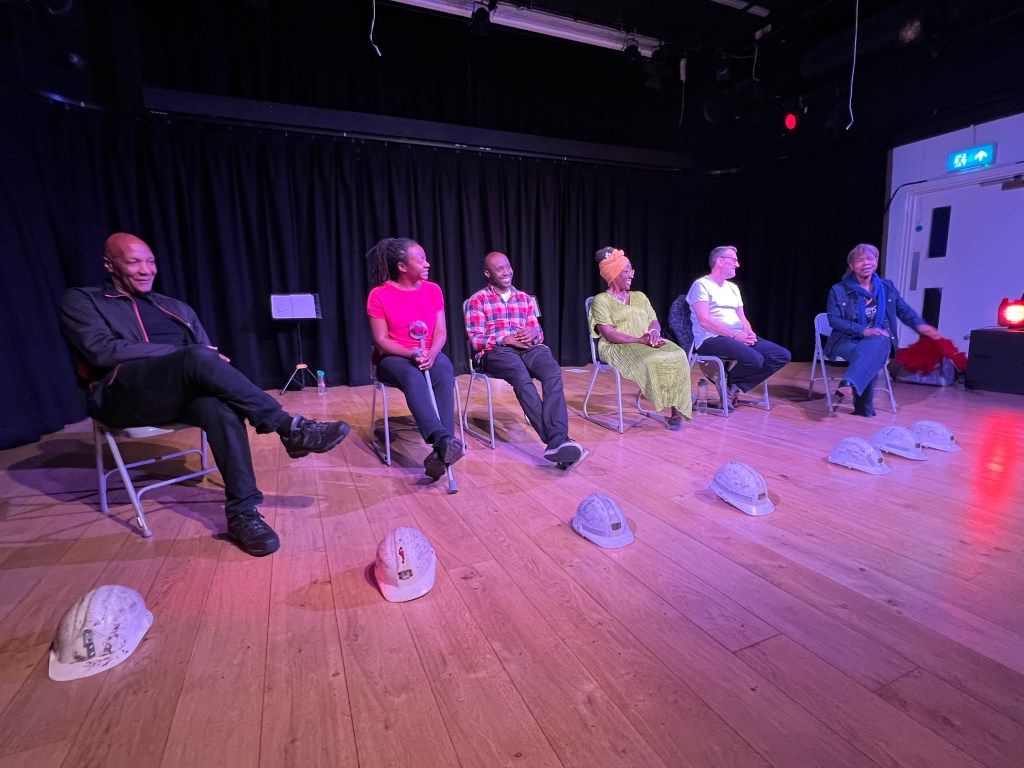
Q & A with left to right; Garry A Morris, Laurietta Essien, Chris Jack, Pauline Tomlin, David Chafer and Janette.
I have very rarely felt so moved by a piece of work as I was here, and it will be another tragedy should funds not be forthcoming in order to turn this staged reading into a full-blown play.
Photographs by Stan Graham
 Tyke It To The Limit