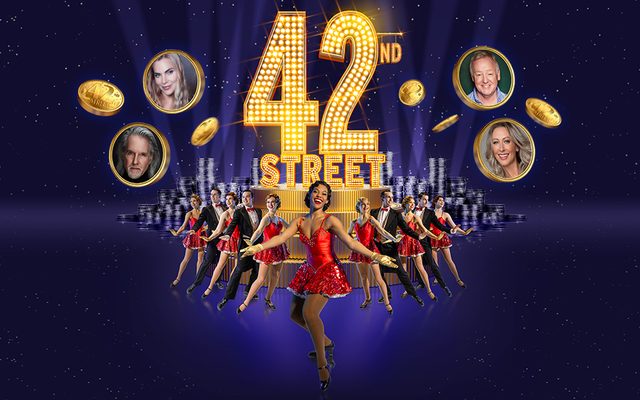
For one week only, New Briggate turns into The Great White Way as the glamour of Broadway comes to Leeds. Actually, because of the fabulous upgrades of Howard Assembly Room and Kino Restaurant, this block which is completed by the beautiful Grand Theatre far outshines anything New York has to offer in its Theatre District.
42nd Street is the latest in a long line of musicals adapted from films which have played here this year and, I think, is by far the best. I admit that it could be an age thing but you will have to go a long way to better the singing and dancing involved. The film was released in 1933 at the height, or should that be the depth, of the Great Depression when 12 million American workers were unemployed (probably only the men were counted) with no government hand-outs available, and 2 million homeless. Most relied on scavenging, begging and soup kitchens, which provided free meals paid for by charities and benefactors. One, in Chicago, was financed by Al Capone!
The film only had five songs in it as musicals were not considered saleable. They were, however, epic numbers made more so by the choreographer, Busby Berkeley, whose routines were legendary for being ultra-lavish. I remember seeing the film on tv in the late 1950s in the days when there were only two channels, both in black and white, and only permitted to show cinema films more than 10 years old. Our 9″ screen did little to convey the full effect.

In 1978 Mark Bramble and Micheal Stewart saw a rerun of the film and decided to turn it into a stage musical by adding extra songs from the back catalogue of composers Harry Warren and Al Dubin. The story is that of a struggling producer trying to put on a stage musical in spite of myriad setbacks. None as catastrophic as the real event which blighted the show when the director/choreographer, Gower Champion, died on the afternoon it opened! The producer kept this to himself until after the performance when he went on stage and announced the news to the cast and audience. That would hardly have sent the customers home in the state of euphoria they had experienced a few minutes before after giving the production ten curtain calls. Fortunately, as far as I am aware, last night’s show passed without incident.
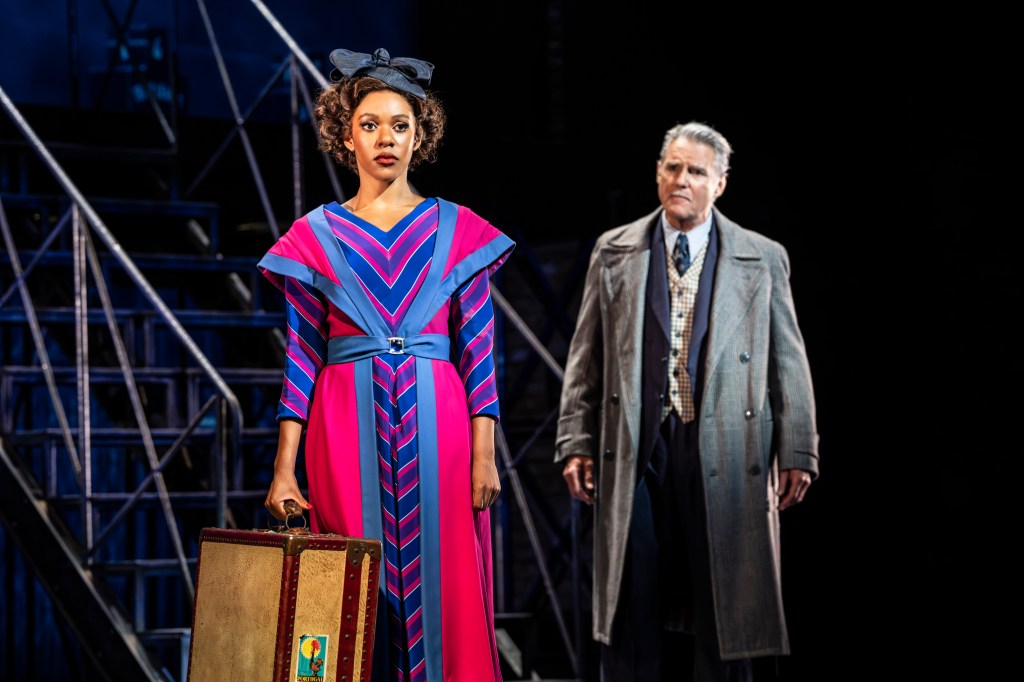
The story is very old school, centring on a young girl, Peggy Sawyer, who goes from Allentown, Pensilvania, which, being a steel producing town, had been hard hit by the depression, to New York, to become a star on Broadway. She misses the audition but makes her way into the rehearsal room where she sings and dances with the leading man, Billy Lawlor, and impresses him so much that when the producer, Julian Marsh, says he wants another girl for the chorus line, Billy hires her. Peggy makes an instant impression on Mr Marsh by nearly knocking him off his feet with her suitcase as she rushes from the stage. She is more successful at bowling over the star of the show, Dorothy Brock, the day before its opening, causing her to break her ankle. As Julian Marsh has fired Peggy for incapacitating his leading lady, thus putting the production in danger of being unable to open, the cast suggest that Peggy takes the place of Dorothy. They catch Peggy on the station platform as she is about to catch the train home, having given up all hope of stardom, and coax her back. After a couple of diva moments, she takes to the stage and, obviously, is a huge success.
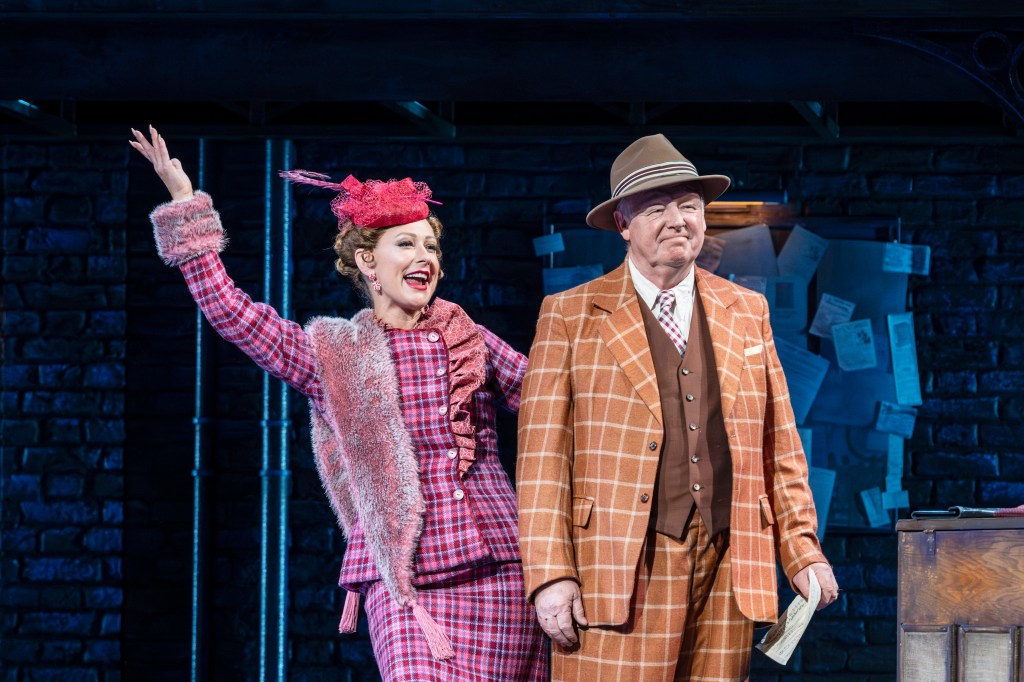
There are four other main members of the cast; Abner Dillon, a Texan millionaire who is funding the production and is, or thinks he is, the boyfriend of Dorothy, who is only with him so as to get the lead in the show; Pat Denning, an old flame of Dorothy who has just reappeared, reigniting the relationship, again putting the everything in jeopardy when Abner finds out and Bert Barry and Maggie Jones, the co-writers and producers.

Although glossed over, this is not a show for the #MeToo generation with the women in the piece only too willing to do what it takes to remain in employment, Dorothy with sugar daddy Abner, then Maggie ‘comforting’ him when he finds out about her affair with Pat. Actually Pat is a gigolo so no angel himself. Another of the characters, played by Sarah-Marie Maxwell, has the nickname Anytime Annie, nuff said.
It was obvious that this was going to be a traditional style musical even before the curtain opened as the orchestra struck up an overture, something lacking in the more modern format. It was also a reminder of the wonderful tunes to come, a list of which I found to be a glaring omission from the programme. As the appetite was being whetted there were projections of 1930s New York displayed on a big screen, interspersed with live snippets of dances from the aspiring artists performing their auditions.

The numbers were mostly presented as set pieces, either as part of the fictitious show, Pretty Lady, or a morph from a passage of dialogue. The first one, Shadow Waltz, fell into the second category, with Dorothy Beck, played by Samantha Womack, in a waltz, what else, at the front of the stage and then sashaying behind the aforementioned screen, onto which strategically placed lamps cast, you guessed it, shadows, continuing the dance as a silhouette. It was brilliantly done and very inventive.
The mainstays of the whole piece were the big tap dancing numbers, notably We’re In The Money, which begins with some street kids finding a ten cent piece in a crack in the pavement, and develops into a full blown, all hands on deck, production. Not surprisingly, the other ‘throw the kitchen sink at it’ song was the title number which ends the show superbly.
The thing about tap dancing is that there is nowhere to hide. Because every foot contact with the stage makes a sound, if someone is even the least bit out of sync it gives the whole thing an air of Dad’s Army being told to stand to attention. On every number the tap shoes hit the stage as one. Amazing.
There were a couple of comedy numbers as well, notably Shuffle Off To Buffalo in which the set was designed to represent a sleeping train being used by Maggie, played by Faye Tozer, and Bert, Les Dennis to take them to Niagara Falls for their honeymoon. The carriage was occupied by several other women into whose compartments Bert kept disappearing, until the climax – sorry – when Maggie threw him out of their carriage with his suitcase marked Just Divorced.
Speaking of comedy, Les Dennis, natch, and Faye Tozer were the light relief. It is obvious that Ms Tozer can sing and dance, being in the band Steps, but her comedy timing was spot on too. For some reason Les Dennis chose to play the part of Bert as being in a constant state of bewilderment, whereas I thought he would have evoked the slick, quick-fire Marx Brothers style wit as was customary in the films of that era. Probably that is why he is doing it and I’m just writing about it.
I had not heard Samantha Womack sing before but she was superb, as was Michael Praed as Julian Marsh. His dancing was limited to a couple of numbers but he was obviously there for his considerable acting prowess.

The star of the show though, or should I say both shows, was Nicole-Lily Baisden who, as Peggy sang, danced and acted her heart out. She was perfectly cast as the young, awkward, innocent dreamer who transformed into the radiant star. She seemed to be on stage for the full duration of the show and by the end must have been exhausted. I bet she is dreading Saturday when there is a matinée as well as an evening show.
Sam Lips, as Billy Lawlor, was no slouch in the singing and dancing department either. His set pieces with both leading ladies, as well as in the big scenes, were superb.
The sets were spectacular and slickly changed between scenes.
Finally to the orchestra under the Direction of Grant Walsh and Assistant Joe Carter. It comprised eight musicians but you would have thought that there was a big band in the pit.
For a great evening of good, traditionally lavish Broadway entertainment then Shuffle off To New Briggate before 42nd Street ends on Saturday, 29th July. For more information and tickets please go to https://leedsheritagetheatres.com/whats-on/42nd-street-2023/
If you still haven’t had your fill of tap, I am sure that there will be the usual suspects outside asking for spare change. How far we have progressed in 90 years!
All images supplied by Leeds Heritage Theatres
 Tyke It To The Limit